


Home
Home
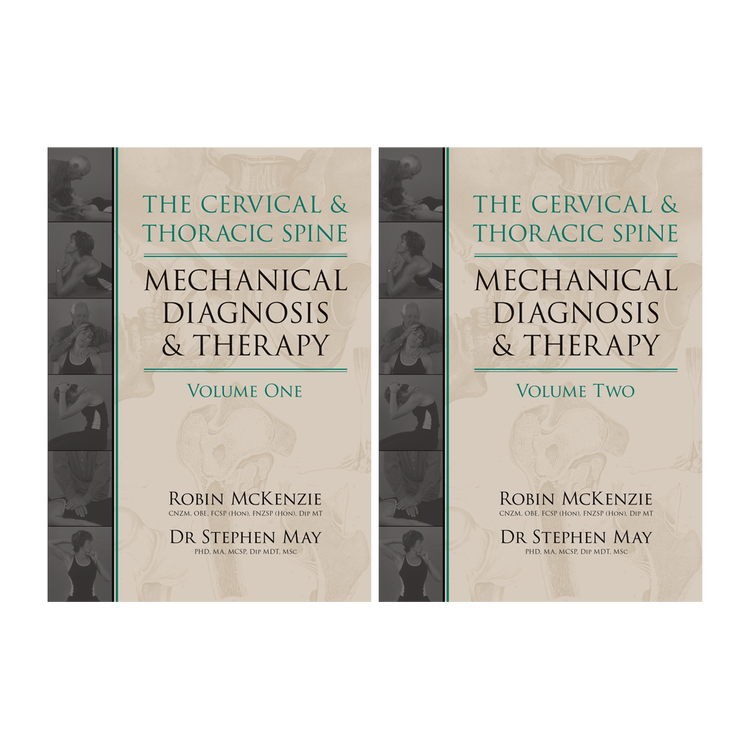
This evidence-based and clinically relevant text offers an in-depth exploration of literature relating to mechanical syndromes and neck/trunk pain.
The second edition is thoroughly updated and expanded into two volumes. Operational definitions and numerous tables provide clinical signs and symptoms to aid the clinician in recognizing suspect mechanical syndromes, or other diagnoses, relating to neck pain, headaches, spinal pathology, whiplash and more. Also detailed are methods to evaluate and prescribe specific exercises/manual treatment techniques.
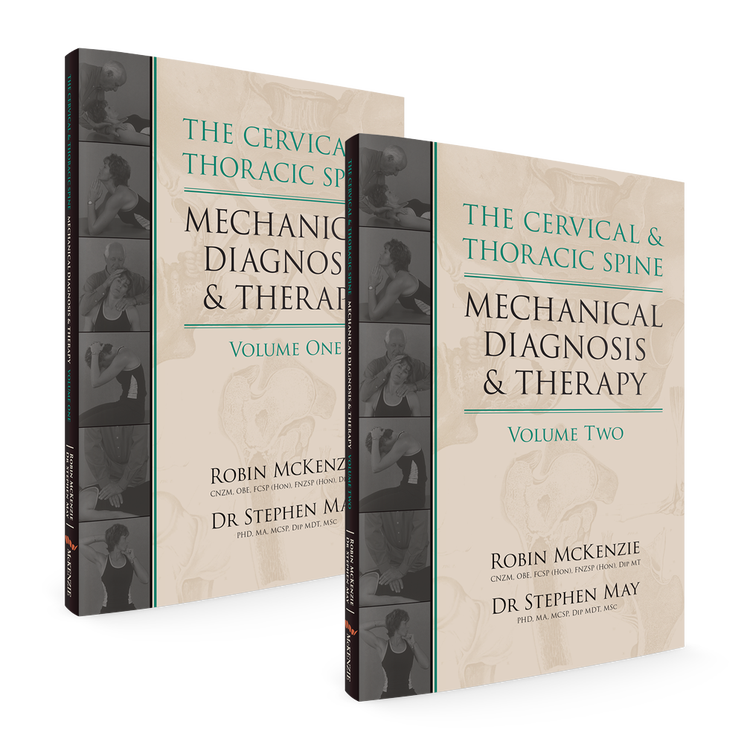
This second edition text is thoroughly updated and expanded into two volumes.
.

.
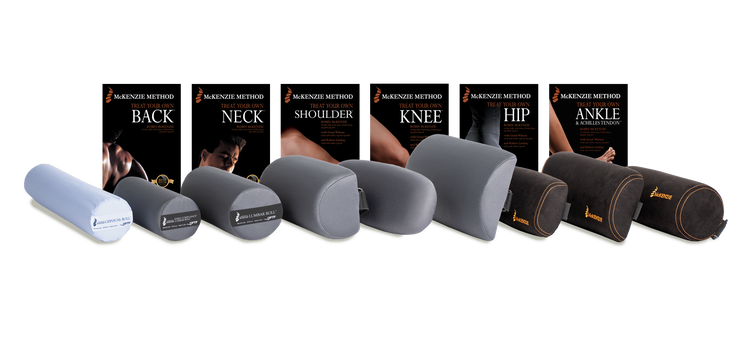
Robin McKenzie created the world's first lumbar roll in 1968. The Original McKenzie® line now includes lumbar and cervical supports for people of all sizes and preferences. His series of Treat Your Own books has grown to address mechanical pain throughout the body.
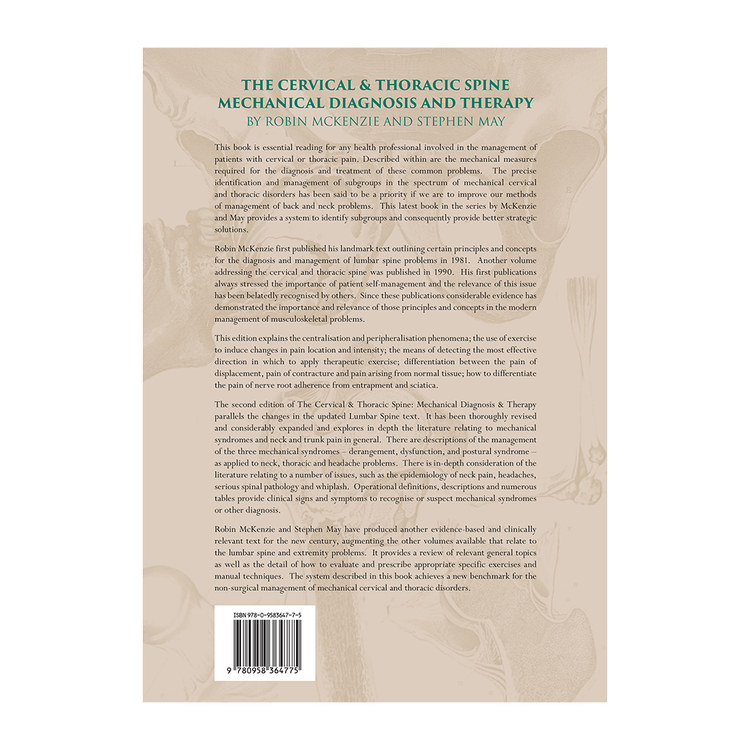
The back cover of The Cervical & Thoracic Spine: Mechanical Diagnosis & Therapy.
This book is essential reading for any health professional involved in the management of patients with cervical or thoracic pain. Described within are the mechanical measures required for the diagnosis and treatment of these common problems. The precise identification and management of subgroups in the spectrum of mechanical cervical and thoracic disorders has been said to be a priority if we are to improve our methods of management of back and neck problems. This latest book in the series of McKenzie and May provides a system to identify subgroups and consequently provide better strategic solutions.
Robin McKenzie first published his landmark text outlining certain principles and concepts for the diagnosis and management of lumbar spine problems in 1981. Another volume addressing the cervical and thoracic spine was published in 1990. His first publications always stressed the importance of patient self-management and the relevance of this issue has been belatedly recognized by others. Since these publications considerable evidence has demonstrated the importance and relevance of those principles and concepts in the modern management of musculoskeletal problems.
.
This evidence-based and clinically relevant text offers an in-depth exploration of literature relating to mechanical syndromes and neck/trunk pain.
The second edition is thoroughly updated and expanded into two volumes. Operational definitions and numerous tables provide clinical signs and symptoms to aid the clinician in recognizing suspect mechanical syndromes, or other diagnoses, relating to neck pain, headaches, spinal pathology, whiplash and more. Also detailed are methods to evaluate and prescribe specific exercises/manual treatment techniques.
This second edition text is thoroughly updated and expanded into two volumes.
.
.
Robin McKenzie created the world's first lumbar roll in 1968. The Original McKenzie® line now includes lumbar and cervical supports for people of all sizes and preferences. His series of Treat Your Own books has grown to address mechanical pain throughout the body.
The back cover of The Cervical & Thoracic Spine: Mechanical Diagnosis & Therapy.
This book is essential reading for any health professional involved in the management of patients with cervical or thoracic pain. Described within are the mechanical measures required for the diagnosis and treatment of these common problems. The precise identification and management of subgroups in the spectrum of mechanical cervical and thoracic disorders has been said to be a priority if we are to improve our methods of management of back and neck problems. This latest book in the series of McKenzie and May provides a system to identify subgroups and consequently provide better strategic solutions.
Robin McKenzie first published his landmark text outlining certain principles and concepts for the diagnosis and management of lumbar spine problems in 1981. Another volume addressing the cervical and thoracic spine was published in 1990. His first publications always stressed the importance of patient self-management and the relevance of this issue has been belatedly recognized by others. Since these publications considerable evidence has demonstrated the importance and relevance of those principles and concepts in the modern management of musculoskeletal problems.
.
No products in the cart.
Continue shopping


